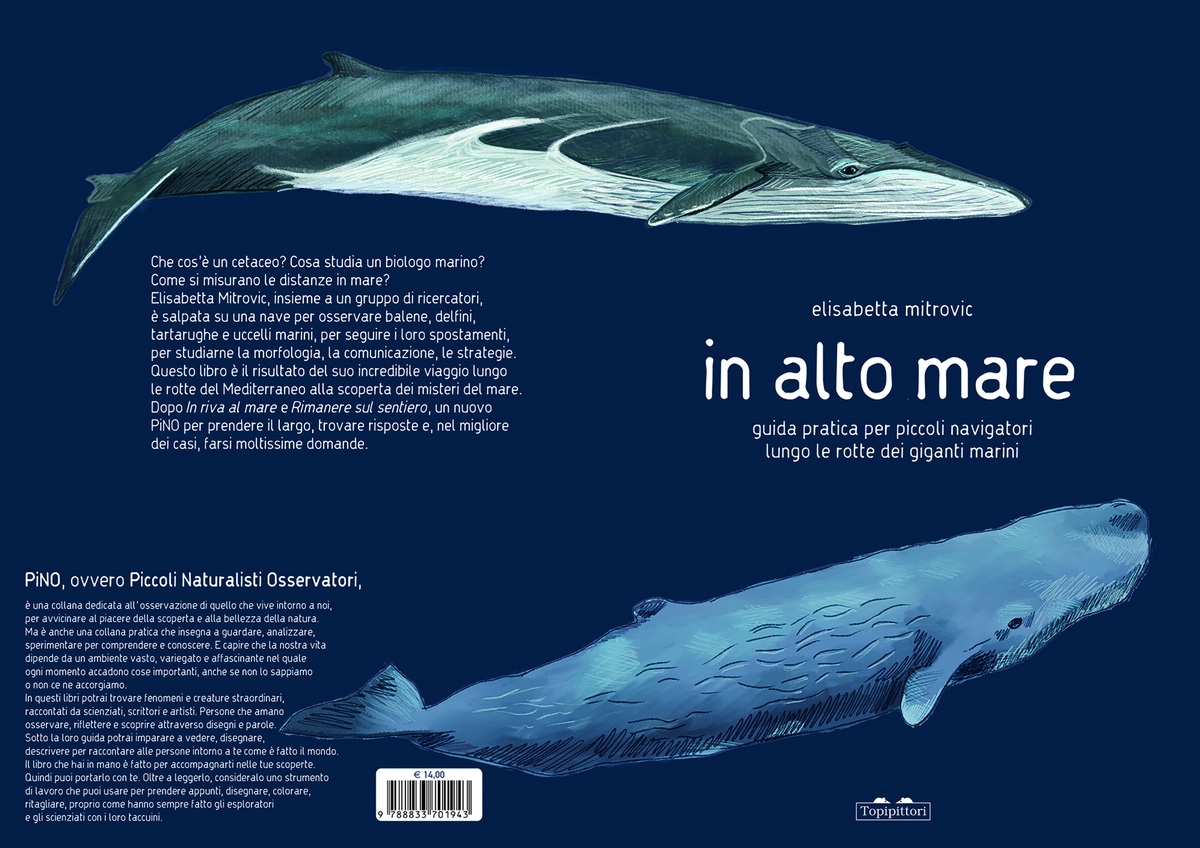

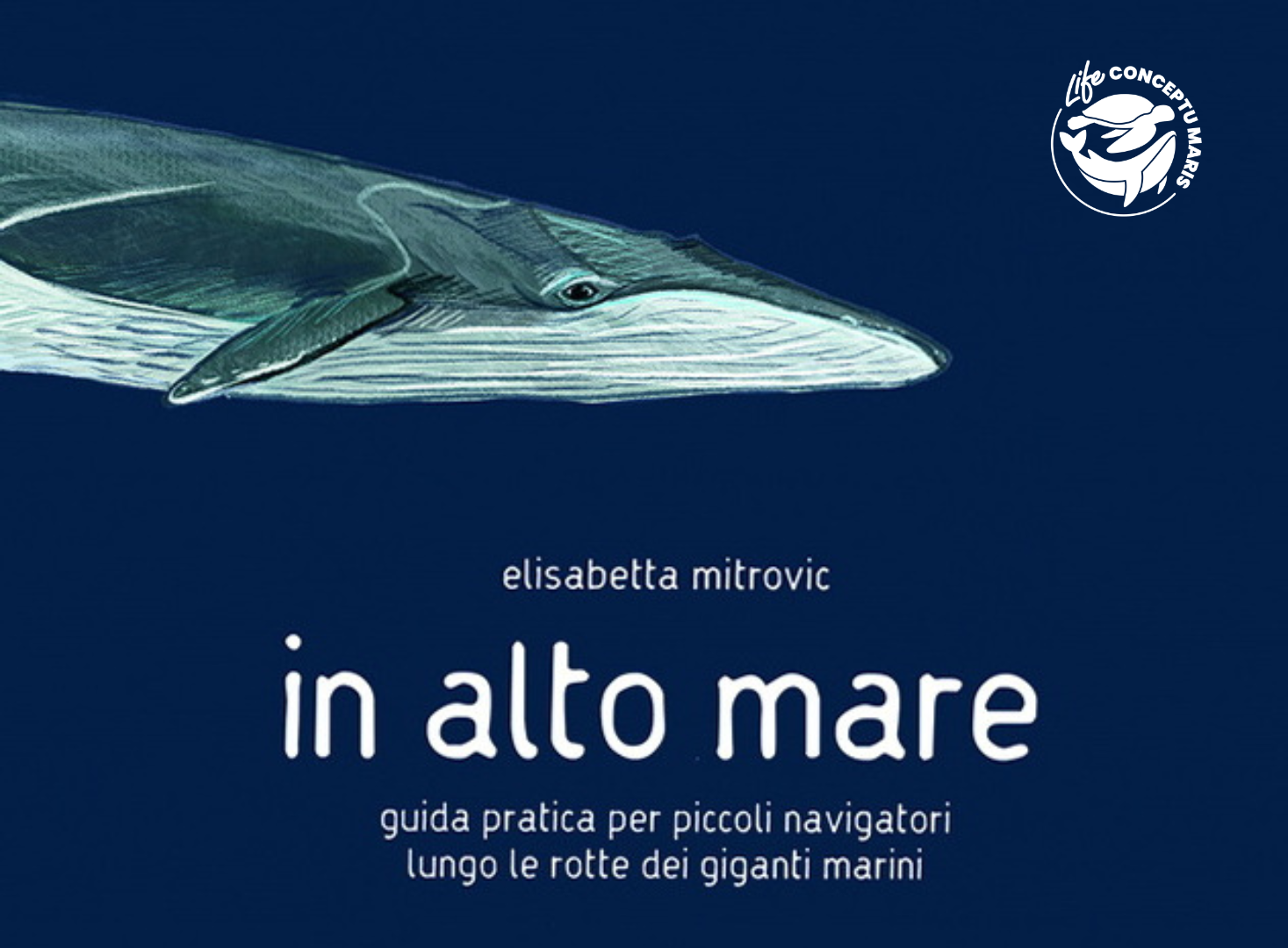

In alto mare (“In the Open Sea”), a book for LIFE Conceptu Maris
Elisabetta Mitrovic is a natural history illustrator specializing in environmental education and science communication. For the publishing house Topipittori, she created—both as author and illustrator— In alto mare (“In the Open Sea”), a book that tells part of the activities of the LIFE Conceptu Maris project, transforming scientific data, species, and stories from the Mediterranean into clear, evocative, and immediate images. The volume, developed also thanks to the consultancy of Antonella Arcangeli, scientific coordinator of LIFE Conceptu Maris, is intended for a broad and curious audience: children and young people, but also parents, teachers, and librarians. The book does not merely describe cetaceans, turtles, and seabirds; it also explains how they are studied and conveys the complex ecology of the open sea.
What is your relationship with the sea?
<<I have suffered from seasickness since I was little, but this sensitivity has never prevented me from living the sea. On the contrary, to manage it I learned to sail by looking at the horizon, staying outside, waiting for something to happen.
My gaze has always been especially drawn to seabirds, a great passion that led me to take many trips to the islands where they nest. My encounter with the world of cetaceans came about thirty years ago, when I met Antonella Arcangeli, now the scientific coordinator of LIFE Conceptu Maris. We were young, full of enthusiasm, and eager not only to learn, but above all to raise awareness among adults and children about environmental and conservation issues.
Those were years of great ferment for the environmental movement: new protected areas were being created and the INFEA system was taking shape, the national network for Environmental Information, Training, and Education. My first knowledge of cetaceans came precisely through Antonella’s perspective; even during her university years she was working on the study of bottlenose dolphins along the Sardinian coasts.
Our professional paths later diverged: I pursued drawing and educational work with children, while she continued with scientific research. But my journeys at sea have always been accompanied by curiosity toward that great blue expanse, waiting for the fleeting appearances of fins and tails of dolphins, striped dolphins, and sperm whales—which for me have remained, in some way, “Antonella’s cetaceans”.>>
How did the book come about?
<<The book was born precisely from the meeting of our experiences. I have been collaborating for several years with Topipittori, a publishing house that considers the book a tool for knowledge, play, and education, with great attention to aesthetic, narrative, and educational quality.
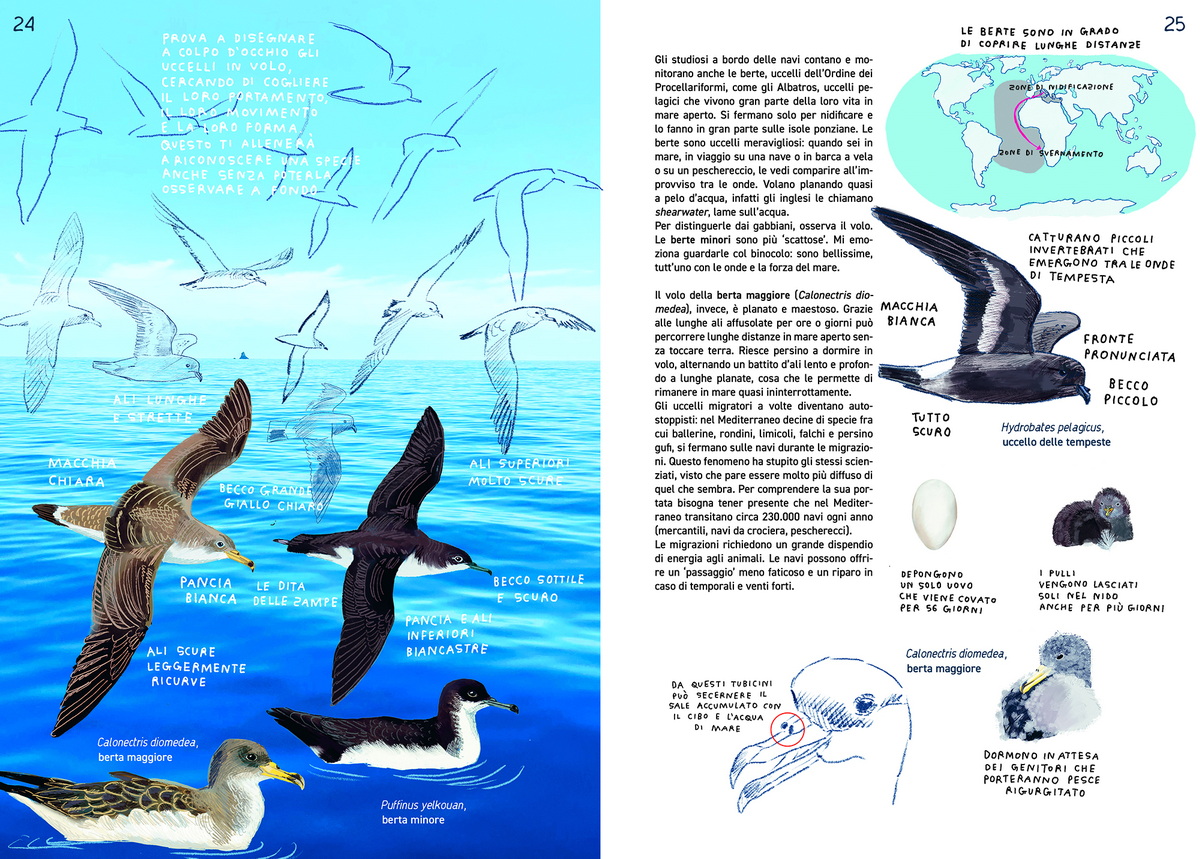
In particular, the PiNO series—Piccoli Naturalisti Osservatori (Little Naturalist Observers)—is designed for children and young people (roughly from age 7 onward) and invites the discovery of nature through observation. The format recalls a field notebook and turns the book into an active tool: it does not just explain, but invites readers to really look, to slow down, to enter into a relationship with what surrounds them.
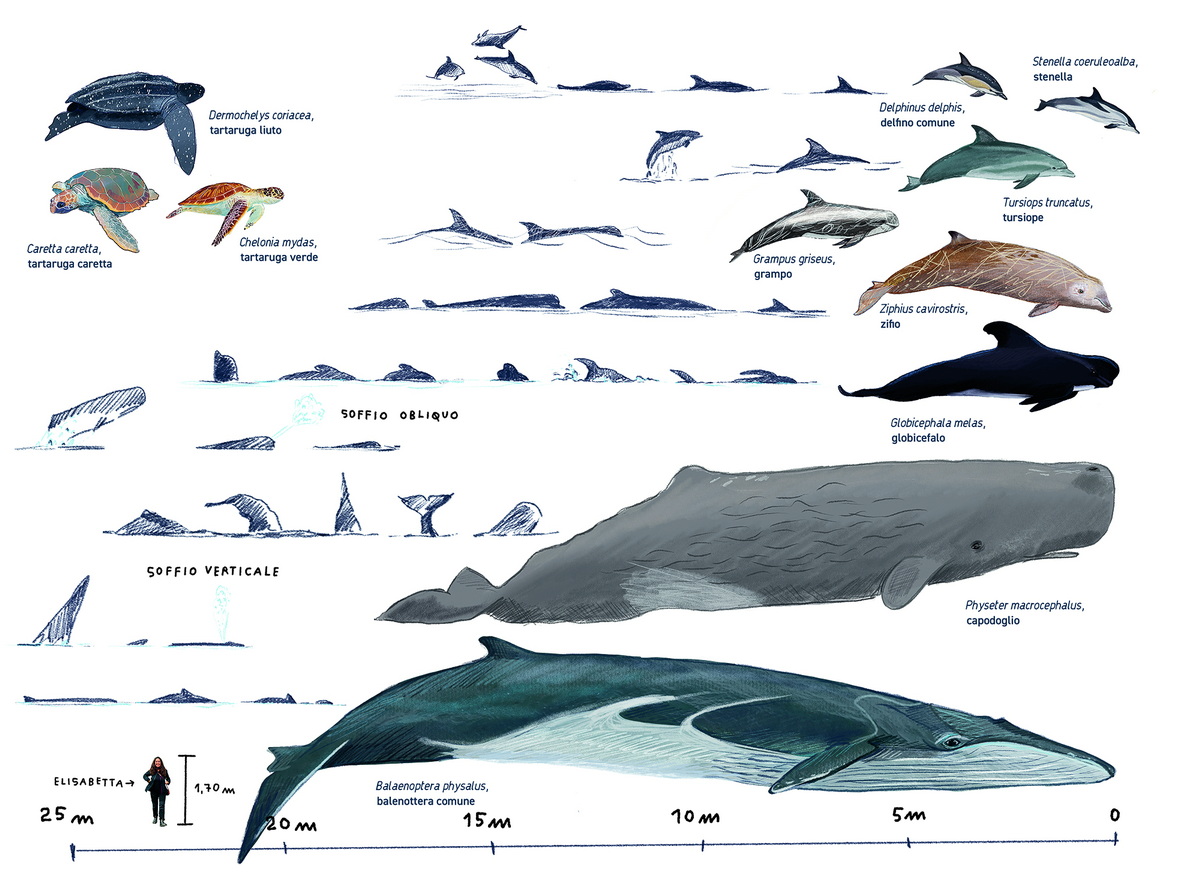
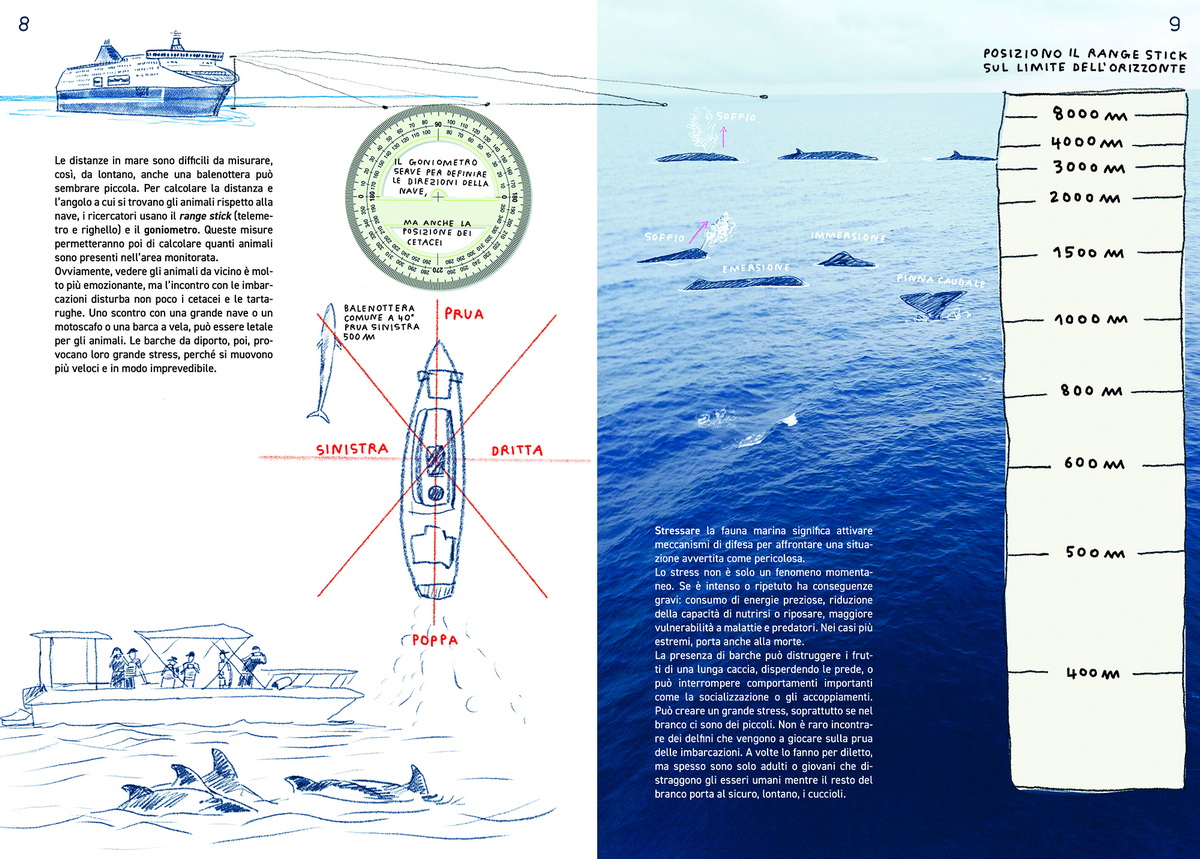
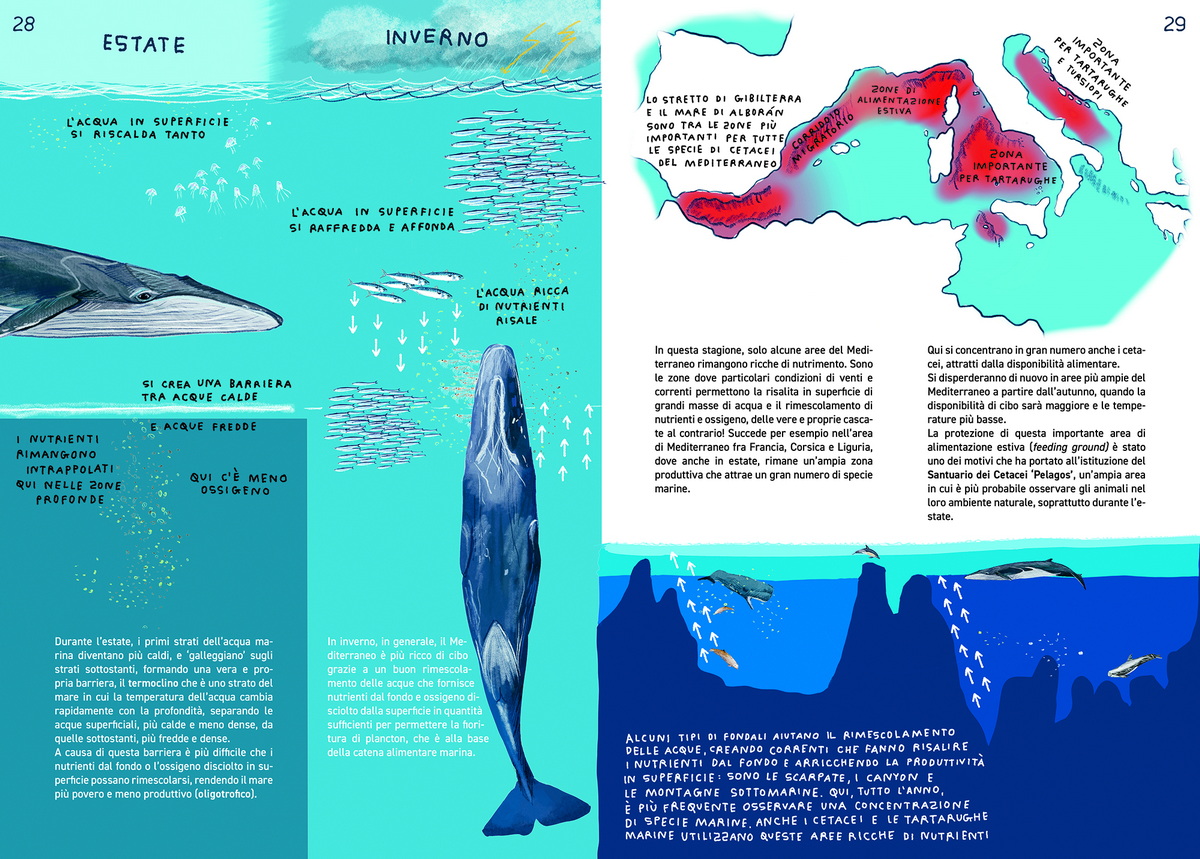
The long-standing work of LIFE Conceptu Maris, coordinated by Antonella Arcangeli, seemed perfect to become a new PiNO title. I thus began to follow the researchers’ work, to learn about onboard tools, collected data, and studied species. My books are not made only of drawings and words, but also of photographs, taken during my observations in nature and conceived to build layered images capable of telling long time spans: what can be observed in two hours, in a day, in a season. For this book I wanted to portray the animals as they appear at sea—often only in fragments—but also in their entirety, to bring readers closer to what they might actually spot from a boat, in the open sea.>>
How has readers’ approach changed over the years?
<<Interpreting an environment means knowing how to tell also what cannot be seen, but is there—or was there—and at the same time activating the reader, inviting them to have a direct experience of the place. I was trained within the context of WWF Italy’s educational research of the 1990s and early 2000s, where the Earth Education method aimed to create meaningful experiences of connection with natural and cultural heritage.
Today, the distance from nature has not diminished; if anything, it may have increased. Many people are drawn to natural environments for the well-being they offer, but a true naturalistic culture in Italy is still under construction. The use of photographs allows me to portray nature as something real and recognizable, not imagined. It is like having an interpreter in your backpack who helps you understand where to look, how to look, what to observe, and also how to know how to wait. In this book, readers have beside them the perspective of the researchers who shared their experiences with me: because many things happen in nature, but you have to be there, at the right moment, with the right tools.>>
Why does this series work so well?
<<The PiNO books speak to children—and adults—as true explorers, not as simple readers. They are not collections of facts, but invitations to observation, curiosity, and questioning. Young people today have access to a great deal of information, but the notebook format, the accurate illustrations, and the clear, never oversimplified language make these books tools to be used in the field. It is as if a naturalist were beside them, guiding them to observe everything in the scientific way. PiNO offers a slow, concrete experience, counter to the speed of screens, restoring value to looking and to direct experience. Each page is a window onto the world, opened by the gaze of the illustrator and, in this case, also by those who conduct scientific research on the cetaceans of our seas.>>
What kind of life will this book have?
<<In alto mare (“In the Open Sea”) will be distributed in bookstores at the end of May 2026. Its summer release accompanies adults and children during the longest days of the year, when people allow themselves the time to be in nature and observe it. It is a much-anticipated moment for booksellers, librarians, parents, and for all enthusiasts of this series, which over the years has built a deep relationship with its readers.>>